The pre workout meal
What to eat before workout
Submitted by our nutritionist Inês Panão
This meal prepares the body and mind for physical effort in addition to contributing to sports performance.
It should mainly consist of carbohydrates, moderate protein, and less fat.
Regarding carbohydrates, the recommendations are to intake >1 g/kg body weight when training lasts longer than 60 minutes.
For longer workouts the recommendations increase to 1-4 g/kg bodyweight.
The type of carbohydrates should be moderate in fiber to facilitate digestion.
Examples: fruit, dried fruit, honey, jams, fruit juices, white bread, simple toast, rice crackers, pancakes.
Regarding protein, it has less impact on sports performance than carbohydrates, but even so it seems to be interesting in muscle replacement (mainly in resistance training lasting more than 2 hours).
Cow's milk and yoghurts should be avoided immediately before training because of their digestibility.
Examples: plant-based yogurt, protein powder, low-fat cheese, hemp seeds (in moderation)
Hydration is equally important and should not be neglected. Care should not be taken only in the pre-training moment, but throughout the entire day.
Athletes who compete must define a liquid intake plan for training and competition, as well as considering the environment and humidity of the test site.
Recommendations are to drink 300-600 ml of liquids with the meal before the event and 300-450 ml in the 15-20 minutes before the event.
There is always an individuality, and it is important to adapt this meal to the athlete's preferences. It is also important to point out that in the case of athletes who compete, changes in the pre-training meal should not be experienced in pre-competition moments.
Examples of vegetarian pre-workout meals:
Porridge with vegetable drink + fruit + honey / jam
Plain bread + honey / jam
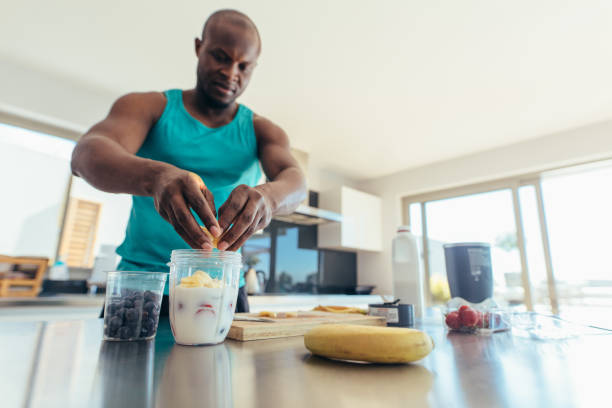
Fruit shake with vegetable protein
Pancakes or rice crackers + fruit / jam + low-fat fresh cheese
Cooked or roasted fat-free rice or sweet potato